Monday, November 25, 2013

Butterflies & More from the Rio Grande Valley

Red-bordered Pixie

The first three weeks in November is butterfly heaven in the Rio Grande Valley.  We took day trips to Edinburg Scenic Wetlands Birding Center, Santa Ana NWR, Quinta Mazatlan, and The National Butterfly Center plus right here at Bentsen RGV State Park.  Here's our Butterfly & Insect photo collection....
Ruddy Daggerwing

Tarantula Hawk

Tropical Leafwing

Dusky-blue Hairstreak

Desert Checkerspot

Insect feeding station

Mexican Fritillary

Western Pygmy Blue

Bordered Patch

Great Purple Hairstreak

Empress Leilia

Malachite

Band-celled Sister

Giant Swallowtail

Isabella's Heliconian

Gulf Fritillary on Turk's Cap

Julia Heliconian


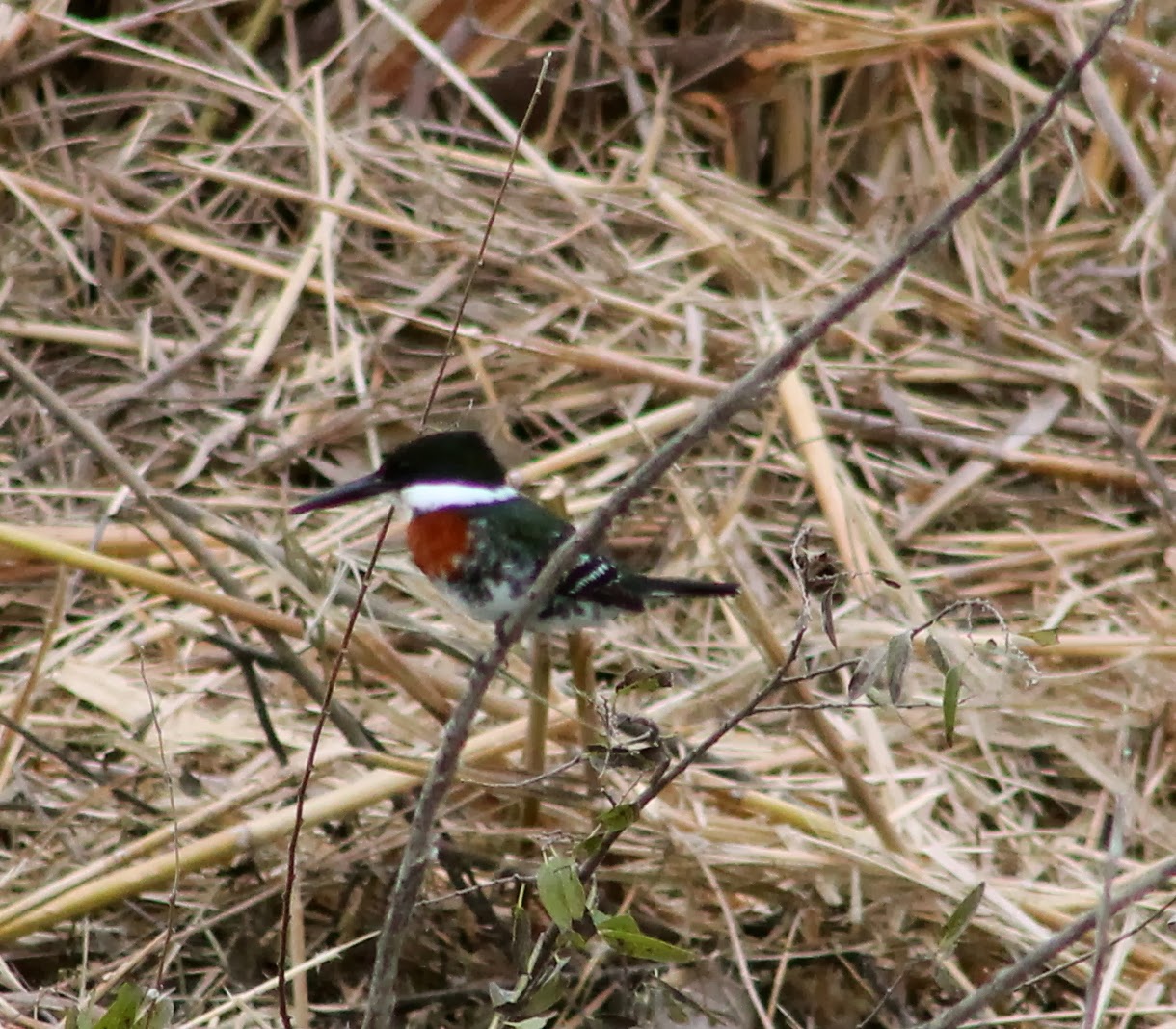
Green Kingfisher


An Amazon Kingfisher was seen 90 miles east of here and we decided that now was the time to see it.  We took off before dawn and at first light heard it calling.  It flew over us to a nearby resaca and we had great looks through the scope, too far away for photos but it looks like this Green Kingfisher only quite a bit larger.

Groove-billed Ani

On the way back west we stopped at Santa Ana and saw 7 Groove-billed Anis and a surprise Rose-throated Becard.

Inca Doves

Happy Thanksgiving from the two of us.
Ty & Ida


Saturday, November 16, 2013

Bentsen Rio Grande State Park


For the month of November we are staying at Bentsen Palm RV Park next to Bentsen Rio Grande State Park.  On the ride west to Mission, Texas we stopped at the Hidalgo Pump House World Birding Center and Anzalduas County Park where we found this large Ringed Kingfisher.
The tropical looking Green Bay

We go into the park almost every day - sometimes 2 or 3 times and here are some of our sightings found at the many feeding stations throughout the park.


The noisy large Chachalacas wait at the feeders for the volunteers to fill up the Peanut Butter log.
Golden- Fronted Woodpecker

This large Altamira Oriole enjoys a little peanut butter.


Great Kiskadee


Although the Clay-colored Thrush is rather plain, this rare Mexican bird is sought after at the park.

 Birds aren't the only wildlife at the park - there are several Bobcats here and it is always fun to see one.
Mama Javelina and baby

Coyotes also roam the park.  we hear them howling at dawn & dusk

Spiny Blue Lizard in the sun. (15" long)


This Vermillion Flycatcher could be found daily in the open park area.


Next Blog we will cover some of our day trips in nearby birding areas.

Best to all,  God Bless!
Ty & Ida Baumann

Monday, November 4, 2013

Rio Grande Valley - The Gulf to Mission Texas


Our last day on South Padre Island was spent at the World Birding Center on Laguna Madre.  This Clapper Rail greeted us along the boardwalk with it's loud clapping call.  This usually secretive bird was not at all hidden, giving us great looks in the salt water marsh.

Other birds along the elevated boardwalk were late migrants such as this Long-billed Curlew.  There was a good representation of wading and shore birds being watched over by a Peregrine Falcon.

In the adjacent Convention Center Natural Area we found many warblers: Hooded, Black & White, Nashville, Magnolia, Am. Redstart, Orange-crowned and Louisiana Waterthrush; Ash-throated Flycatcher, and this beautiful Rufous Hummingbird gathering nectar from this flowering bottlebrush.

We made a couple other stops at "postage stamp" wildlife areas where flocks of Indigo Buntings and Blue Grosbeaks fed on grass seeds plus a Summer Tanager.


This 30 foot statue of Jesus stands as a memorial to Shrimpers lost at sea at the harbor.  This perched Great Blue Heron finds Christ's outstretched arms as a place of refuge.

Early the next morning we went with Captain Scarlet Colley and her "Dolphin Adventures" out of Port Isabel to see the rare Mexican Mangrove Warbler.  A beautiful yellow bird with a deep rusty head.

Along the way we saw this Great Blue Heron whose eyes were bigger than it's stomach or throat.

We appreciated George & Scarlet's personal hospitality and use of their dockside RV site for the night.

At 4:30 AM we drove to Laguna Atascosa National Wildlife Refuge to look for night birds such as Barn Owls & Com. Pauraques.

The auto drive was closed to public vehicles because of the endangered Ocelot's movements.  We took the small park bus on a 2 1/2 hour personal tour with only the naturalists and driver.

This White-tailed Hawk was one of our new birds for the year.

On the road south to Brownsville we found two Aplomado Falcons near the Old Port Isabel Road.

We stayed at Rio RV Park south of the famous Brownsville Sanitary Landfill (fortunately the wind was in our favor).  We scoped and found Tamaulipas Crows, Chihuahuan Raven and Crested Caracara.

This photo of the Caracara was taken on the road to Boca Chica.  This extensive salt flat marsh goes for 16 miles from Brownsville to the gulf.  Bird highlights also included hundreds of Reddish Egrets (dark & white morphs), Am. Avocets, 4 species of plovers, Harris Hawk, Cassin's & Lark Sparrows and Bronzed Cowbirds.

At the southern most point of Texas is Sabal Palm Sanctuary.  We walked the trails and boardwalks stopping at the bird blinds and feeding stations where we observed Least Grebe (photo), some feeding just hatched young; Green Kingfishers, many herons and gallinules.

We settled into a Weslaco RV Park near Estero LLano Grande State Park; one of Tropical Texas' best birding places.  A few of our birding highlights include this sleeping Com. Pauraque; Yellow-crowned & Black-crowned Night-herons, Anhingas, Buff-bellied Hummingbirds, Red-Crowned Parrots and .................

this sleepy Eastern Screech Owl.  A total of 80 bird species were found in the park in the 2 days we were there.

We found this 8" (half grown) Giant Cane Toad in a small pond near the feeding station at Estero.

We also watched a Texas Tortoise quickly (at least for a tortoise) walk toward us looking for special plants to snack on.

A new experience for us was the mass migration of thousands, maybe millions, of butterflies.  From ground level to hundreds of feet in the air were glittering, fluttering wings.  One of our favorite new species was this Mexican Blue-wing.


We went to Frontera Audubon Center and it's wonderful thicket with feeding stations and watering holes along the many trails in this small acreage.  We were delighted to know that the Golden-crowned Warbler had been seen there recently.  However, we discovered and reported that there were actually two Golden-crowned Warblers - a beautiful adult male and a paler young bird.


We took an RV site in Alamo near Santa Ana National Wildlife Refuge.  There was virtually no water in the ponds reducing the bird life greatly.  We barely found 25 species out of the 400 listed as being here.

We drove to the Edinburg Birding Center and Scenic Wetlands where we found this flock of Black-bellied Whistling Ducks.

Butterflies and Dragonflies such as this Flame Skimmer were abundant on the acres of flowering plants.


We are now in Mission, Texas for the month of November right next to the Bentsen Rio Grande State Park.

Wishing warm greetings to you.
God Bless you all.
Ty & Ida Baumann

Wednesday, October 23, 2013

Central Texas Southward


Copper Breaks State Park was our first stop in Texas on Oct. 9th - a desert oasis where we found our first Ladder-backed and Golden-fronted Woodpeckers.

A number of large Desert Blonde Tarantulas were crossing the roads early in the morning as we drove south.

We headed to Abilene State Park, another wooded area with more new birds including our first Black-throated Sparrows.

We stopped at a wayside where we found our first Canyon Towhee.

The next two nights we spent at South Llano River state park.  This park had four bird feeding stations with water features and viewing blinds.  This Western Scrub Jay came to drink and bathe in the fountain.

This Vermilion Flycatcher was one of the many new birds we found including Verdin, Lesser Goldfinch, Spotted Towhee, Black-crested Titmouse, Bewick's Wren, and Lark Sparrow.


This park has one of the largest Rio Grande Turkey roosts in Texas with over 800 turkeys coming for the winter.  This roost area is closed each afternoon at 3 pm until 10 the next morning.

This Spiny Lizard was one of our best finds at the Kerr Management Area - managed for the endangered Black-capped Vireo which nests early and migrates south in August.


We stayed at the Guadalupe River RV Park through the torrential rains and flooding that hit both east and southwest of us.

We drove southeast through hugh oil fields to the coast.  We spent four days at Goose Island State Park.  This White-tailed Deer buck was near our campsite being bothered by as many mosquitos as we were.  We switched sites to the gulf coast after one night to the breeze that blew away the bugs.

This American Oystercatcher was one of many birds in this restored wetland.  We found Whooping Cranes while scoping across the bay to Aransas National Wildlife Refuge.

At Goose Island there were also Clapper Rails, Long-billed Curlews, Marbled Godwits, Roseate Spoonbills and Reddish Egrets plus the usual water birds.

A strong north wind brought in many migrating passerines.  It also blew around leaves and seeds such as these caught in the web of this Golden Orb Weaver.

We visited the "Big Tree" a champion Virginia Live Oak and in the area were hundreds of beautiful migrating Scissor-tailed Flycatchers.

We know these birds have been in the blog before but they are so irresistible to photograph.

The ferry took us to Mustang Island at Port Aransas and we checked out the beach at the state park.  Here we found this unusual gull,  park naturalists and a local bird expert went to check it out.  Other than bright orange bill and legs it has the characteristics of the Laughing Gull.  We found out that it is a "Mutant" and a one in a million find.

Also on the beach, hidden in the sand dunes were Snowy Plovers.  There were also Piping and Black-bellied Plovers, Ruddy Turnstones, and Sanderlings.   Many Sandwich, Royal and Forester's Terns fed in the rolling waves.

Early next morning a Lesser Nighthawk swooped into the campground and landed on the picnic table right across from our site.  He closed his eyes and went to sleep, ignoring the camera and photographer getting closer and closer.


We took Hwy. 77 south for 80 miles along the huge 825,000 acre King Ranch.  We found our first Green Jay at a beautiful wayside.  Along the route we saw White-tailed and Harris Hawks and Crested Caracaras (Photos in future blogs hopefully) plus many more Scissor-tailed Flycatchers.


For the next four days we were at South Padre Island at Isla Blanca County Park at the southern end of the island.  Things were really hopping here along with these Black-tailed Jackrabbits which were the main wildlife.

Our first Couch's Kingbirds were here with a good number of Tanagers, Orioles, Warblers, Buntings and Sparrows that came in with the cold front and northerly winds.  A cold front here means 80's instead of mid 90's.

To our friends up north with frost and snow flakes we send you warm greetings.

Ty & Ida Baumann