Saturday, June 8, 2013
Lower Michigan
Here we are on the opposite side of Lake Michigan, not what we are accustomed to. It's like a mirror image (well almost) except for the large, some over 600 feet high, sand dunes. This photo is at Warren Dunes State Park.
We spent Memorial Day exploring the park and found many warblers: Yellow (pictured), Hooded, Canada, Yellow-throated, Chestnut-sided, Magnolia, Wilson's, & Am. Redstart, all in the campground. We walked out to the dunes and found the Prairie Warbler singing there.
The Berrien County Audubon Society had put together a birding tour map booklet that we enjoyed following. We went to Forest Lawn Road Floodplain, Kessling Nature Preserve, Warren Woods State Park, Mud Lake Bog Preserve and Fernwood Botanical Gardens. Found lots of birds, flowers and wildlife including this cute Woodchuck.
Our last stop in the county was to Sarett Nature Center with a walk on the Tree Top Trail (an elevated board walk, 40-50 feet above the ground) giving us a "bird's eye view".
Their new exhibit was a Butterfly House where we spent considerable time finding and photographing the 24 species. This White Peacock Butterfly posed on the Iris which was one of hundreds of beautiful flowers in this landscaped atrium. An exhibit window showed hundreds of hot glued chrysalids ordered from Florida, waiting for metamorphosis.
After two days at Van Buren State Park on the lake we moved about 10 miles to a brand new RV family campground east of South Haven. The birds here were Bobolinks, Field Sparrows and Eastern Meadowlarks (pictured) as this was a former farm. Very nicely done and we were able to catch up on email, laundry and cleaning (work, work, work). Can't bird all the time!
As we continued north along Lake Michigan through the Allegan State Game Area, we followed the Kalamazoo River where we added a Cerulean Warbler to our year list. We stopped at Saugatuck Dunes State Park then to Holland, MI taking a campsite at Holland State Park on Lake Macatawa. We found this beautiful Fox Squirrel at the Grand Haven State Game Area along with many wetland birds that we added to our Michigan list.
We drove northeast along Muskegon State Game Area where we found an abundance of Dragonflies and Damselflies like this Ebony Jewelwing. We headed north to Fremont then back west along the White River in the Manistee National Forest.
The White River RV Resort & Campground was one of the most diverse birding areas that we encountered in Michigan. It was interlaced with many streams, ponds, and forest trails that had wild flowers including this Pink Lady's Slipper. We found over 60 species of birds plus adding a Golden-winged Warbler to our year list.
As we drive north, we are encountering new nesting birds: Com. Raven, Upland Sandpiper, Clay-colored Sparrows, Northern Goshawk, Purple Finch and Nashville Warblers. This Nashville is showing off his bright top knot, not often seen in migration.
In order to complete our "Grand Slam" of Eastern Warblers for the year we arrived early at the U.S. Forest Service Visitor's Center in Mio for the Kirtland's Warbler video introduction. Our car pool group drove to the Jack Pine Stand to be guided into see this endangered species. At a distance we heard and saw 3 singing males.
As the group dispersed we continued on the 58 mile self-guided auto tour and heard and saw four more Kirtland's Warblers. We walked the Ruffed Grouse Trail and found one grouse but Ovenbirds were abundant. This one stayed around for several photos.
Looking forward to birding the rest of Lower Michigan and the Upper Peninsula.
God Bless,
Ty & Ida Baumann
Friday, May 31, 2013
Tennessee, Kentucky & Indiana
Traversing northward along the back roads of Tennessee we encountered this six foot plus Common Kingsnake. It was one of many found along the country roads near Paris Landings where we spent the night.
The "Land Between the Lakes" is a National Parkway on the Tennessee/Kentucky border with a plethora of birds including this Yellow-breasted Chat. This area includes a historical 1850's working farm, a nature center with live animal displays, a planetarium where we took in a show plus several campgrounds that we took advantage of.
The most interesting area was the Elk & Bison Prairie with a 3 1/2 mile auto tour. At dawn, in the rain, we drove this meandering trail where part of the bison herd blocked the road.
The Bison herd, along with the Cattle Egrets moved across the prairie and met up with us on the next loop of the road. We heeded the warning about not getting too close but the bison did not.
Remaining stationary, they surrounded the RV. We were afraid one was going to use the vehicle as a rubbing post. This rain soaked calf was curious about our intrusion into it's territory - coming very close. Mom soon called him and he bounded away.
Elk cows were quite evident, but the bulls were wary and stayed in the wooded area only giving us a glimpse of their velvet covered antlers.
As we traveled along the farmlands to the Kentucky border, we encountered many singing Dickcissels.
We spent the night at J.J. Audubon State Park on the Kentucky/Indiana border. This Bluebird pair serenaded us from their favorite perch.
This irridescent 6-spotted Tiger Beetle was on the boardwalk of the Nature Conservancy trail around a small lake.
We crossed the Ohio River and drove to McCormick Creek State Park. This falls is on one of the many trails where we found 62 species of birds including many singing Kentucky Warblers.
We found this large Luna Moth at McCormick Creek - another beautiful insect.
This forested park boasted some of the largest (both in diameter and height) Beech Trees in the state.
We spent Memorial Day weekend at Lafayette, Indiana. We birded Celery Bog (a natural area just north of Purdue University) and found over 80 species of birds including this Hooded Warbler. Altogether we found 12 species of warblers with Connecticut, Mourning and Wilson's being new for the year.
We attended Victory Christian Center for a special Memorial Day Service then walked the steep trails of the Clegg Botanical Gardens that border Wildcat Creek. We photographed this rare Kentucky Lady's Slipper on the hillside.
Now we are headed into Michigan, an area that we have never traveled before and are looking forward to seeing the other side of Lake Michigan.
So long for now, good to be back north.
Love & Prayers,
Ida & Ty Baumann
Sunday, May 19, 2013
Dauphin Island & Natchez Trace
On May 7th we crossed Mobile Bay on the ferry to Dauphin Island, Alabama. As we started to explore the island we saw Scarlet Tanagers covering the ground. This looked like a true "fall out" as the birds were so exhausted from crossing the Gulf of Mexico.
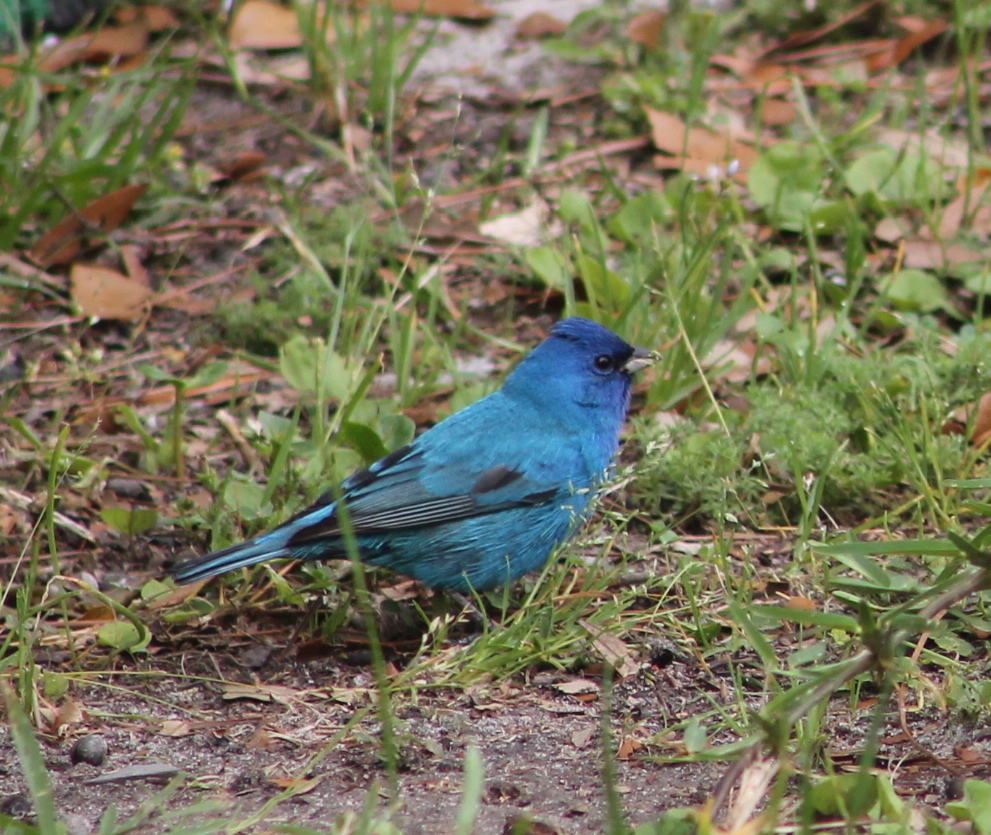
Along with these were Summer Tanagers, Blue & Rose-breasted Grosbeaks and flocks of Indigo Buntings (pictured) and much more, so close you could walk right up to them.
We were blessed with a campsite adjacent to the Audubon Bird Sanctuary and the trees were dripping with birds. We had four species of thrushes (Veery, Gray-cheeked, Wood & Swainson's) (to the left) in the largest concentration we have ever experienced.
We had very diverse birds from Bobolink & Dickcissels to Sora Rail in the wet grass. On the trails we had 12 species of warblers - totaled 92 species for the day and a half we were there.
Several times we walked to Fort Gaines Historical Site, the dock area, sand dunes and beach and the trails of the bird sanctuary. These Blue Grosbeaks were resting and feeding on the lawn by the fort.
We traveled into Mississippi, first stop the Paul B. Johnson State Park south of Hattiesburg. (No, we didn't stop in to see Brett Favre cutting his lawn.)
Out of the 50 species of birds in the park, the Summer Tanagers were very vocal like this young male molting into adult plumage.
We drove west to access the Natchez Trace Parkway, over 400 miles of meandering "rustic road" taking us through hardwood forest (oak, maple, beech, hickory, tulip and sweet gum), cypress & tupelo swamps (pictured to right) and a patchwork of prairies.
We slowly moved up the Trace stopping at each historical marker, nature trail, and overlook. We learned about Mississippi's history of the Indian Tribes, the first settlers and the Civil War.
Our trail walks provided many viewing and photo opportunities like this big Bull Frog. We found the Swainson's Warbler (a rare target bird), a cross fox, skunk, Mississippi Kites and a Cottonmouth the hid from the camera under the water.
We traveled about 50 miles each day camping at State Parks (Natchez, Ratliff Ferry, Tombigbee and Tishomingo) We were very happy with warbler migration finding 23 species including this beautiful Prothonotary. It's fun to see and hear all the Hooded, Canada, Worm-eating, Kentucky and Yellow-throated Warblers, Louisiana Waterthrushes and Yellow-breasted Chats.
The Trace crosses a corner of NW Alabama and into central Tennessee. We stayed at David Crockett State Park known for their fine turkeys. This Tom is strutting his stuff trying to impress the hens.
This 5-lined Skink (immature has the blue tail) was found on one of our hikes.
May 13th marked 2 years "On the Road" driving 44,000+ miles, 30 states and 8 Canadian Provinces seeing 628 bird species.
Wanting to continue our successful birding adventure we thought we couldn't go wrong by staying at Birdsong RV Park on Kentucky Lake next to the Tennessee National Wildlife Refuge. This Brown Thrasher welcomed us to the park with his melodious Bird Song.
Bye "you all" (pronounced with a Nashville twang)
Blessing, Ty & Ida
Monday, May 6, 2013
Florida's Panhandle
De Soto County Park is on the Florida Gulf just south of St. Petersburg. We spent three days birding the arrow shaped island and found several Gray Kingbirds like this one on the left. We had hoped for a good warbler migration but it didn't materialize. We had Black-whiskered Vireos in the Mulberry trees along with Indigo Buntings and Blackpolls.
We stopped at Honeymoon Island and the most common bird here were Ospreys. There were many nests along the trail, some with very small young. This Osprey got himself a nice meal of sea trout.
We found a quiet campground at Chassahowitzka River. Large springs form this river. The campground area was filled with the song of the Carolina Wrens. This one put on quite a show.
We rented a tandem kayak and explored the maze of inlets and bayous filled with playful otters, schools of mullet and large alligators.
We then spent two days at Manatee Springs State Park. We found this Pileated Woodpecker searching for carpenter ants and eating them down quickly.
We found Prothonotary warblers among the cypress trees on the boardwalk.
For the next three days we stayed near St. Mark's National Wildlife Refuge spending each day exploring the different habitats and trails. There were many Purple Gallinules in the cattail/pond lily area along with Least Bittern and Marsh Wrens.
For two days in a row we found this Mississippi Kite perched near the entrance to the Wildlife Refuge. This was one of our retirement target birds that we hoped to see in this area. The first day he was wet and ruffled so we were glad to see him looking his best the next day.
Here's a sight that stopped us - by the side of the road at St. Mark's was a Soft-shelled Turtle. Look closely under her shell for the egg she is laying.
We had our best bird list here with 122 species, including a great shorebird migration.
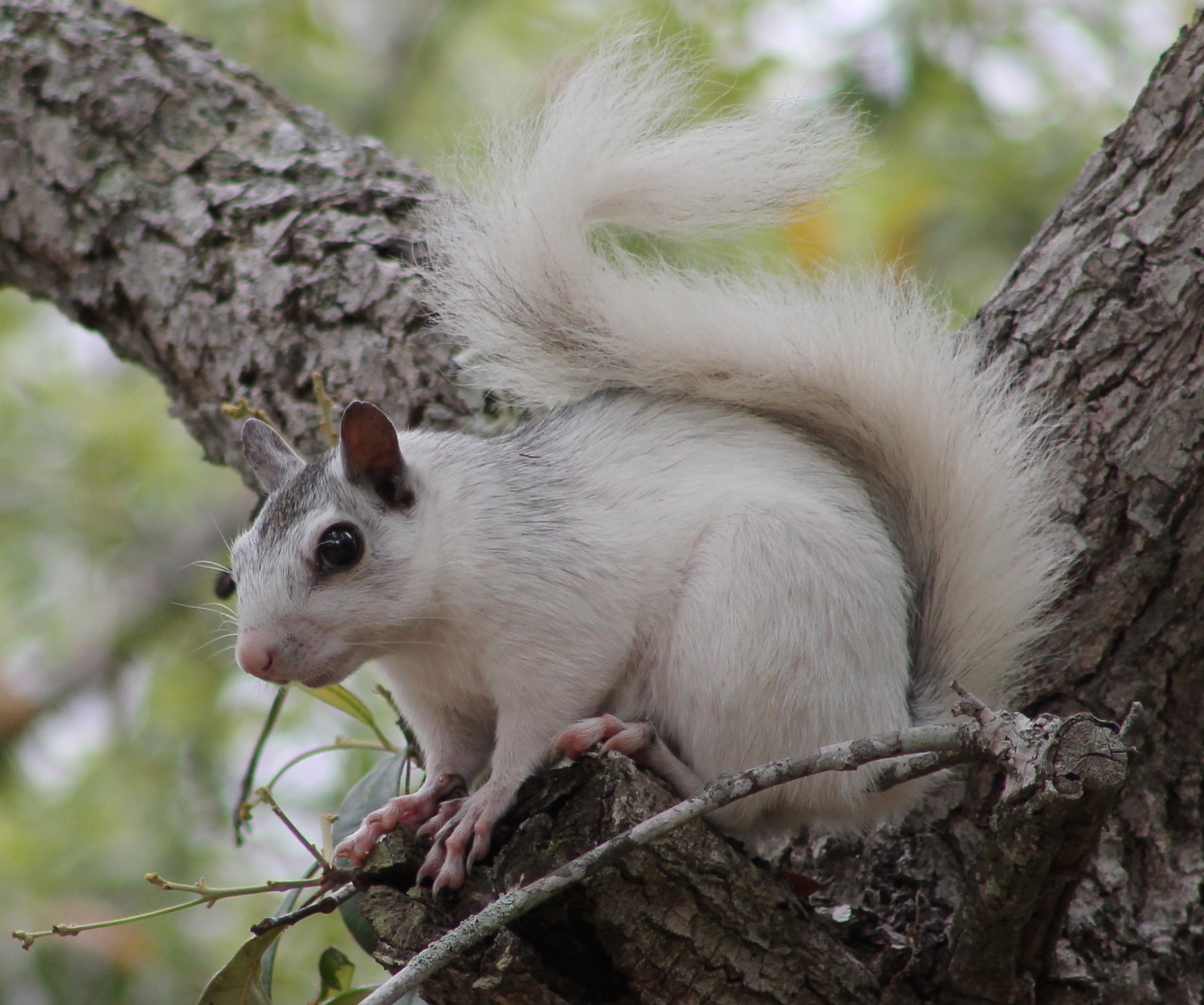
Next stop was Ochlochonee State Park which is famous for two things: White Squirrels (gray squirrel variant) and Red Cockaded Woodpeckers. At least one wanted their picture taken. The woodpeckers were being very quiet and secretive as they were nesting but we had some good sightings.
This is our last Florida stop - the snowy-white beaches of Destin. A walk on the beach yielded close encounters with several Least Terns. This act of passing fish is part of pair bonding.
We also saw four Masked Boobies fly by.
As we leave Florida for Southern Alabama we reflect on all the wonderful adventures of over six months. We have 258 species of birds for that time. It certainly was a great time.
Our best to all, God Bless! Ty & Ida Baumann
Saturday, April 27, 2013
North along Florida's Gulf Coast
An early morning stop at Audubon's Corkscrew Swamp gave us two surprises - the brand new Nature Education Center and the extremely dry conditions from the several years of drought. Most of the birds were concentrated in the two remaining "gator holes". It was sad to see so little water around the knees of the Bald Cypress and the Pond Cypress trees. This Roseate Spoonbill was one of only a few birds in the ponds. Only two Wood Storks were seen. When we visited here many years ago this was the main nesting area for them.
We drove to Fort Myers Beach and camped a week at the Red Coconut RV Resort - right on the snow-white sands. The gulf water was warm - suitable for salty swimming, shell collecting and bird watching. This Snowy Egret was feeding in the surf along with Willets, Sanderlings and Ruddy Turnstones. Magnificent Frigatebirds soared over the condo towers along this barrier island.
We took a day to visit Ding Darling National Wildlife Refuge on Sanibel Island. Along the four mile auto tour, we stopped numerous times to hike and explore this gem of Florida. We observed this Yellow-crowned Night-heron catching a crab for breakfast. He carefully clipped off the claws then swallowed the rest whole.
This lively River Otter was too busy securing his own breakfast to pay attention to the camera. He was diving for oysters and crabs.
We reported a fishline tangled Black-crowned Night-heron to the local rehab center (CROWS) and they rescued the bird from being tied to a tree branch.
This Black Racer was sunning along the edge of the nature trail, the sun felt good on this cool morning.
Adjacent to the Red Coconut was the Matanza Pass Preserve - a nature conservancy with extensive hiking trails and boardwalks through the mangroves. This young raccoon got separated from his family - mama was calling and he kept playing "peek-a-boo" with us as he tried to get across the boardwalk.
We spent 4 days at Myakka River State Park in their new RV campground. Bobwhite quail were quite abundant in the area. They whistled their presence and scooted here and there. This female quickly darted across our site followed shortly by the male.
Who says only birds respond to "pishing"? This 9-Banded Armadillo sat up and took notice to the sounds, (as he is a little near sighted) taking a break from hunting for grubs. This South American import is fond of digging up lawns and not appreciated by homeowners.
There is lots to see at Myakka and one treat was seeing these young Barred Owls, found high in a live oak tree.
We walked the canopy walk, an elevated suspension bridge between two towers. A beautiful walk in the tree tops.
We also took the "Gator Gal" (the largest air boat in Florida - and very quiet too) on a tour of Lake Myakka. Lots of alligators, wild hogs, Black-necked Stilts, Ospreys fishing and many herons and egrets.
This is a Black-hooded Parakeet (Nanday) that we found a flock of on our way out to Ft. DeSoto County Park just south of St. Petersburg. We spent a day and a half on this Key and found great shorebirds, terns, and added Am. Oystercatchers to our list.
It's getting to feel a lot like summer here and we will keep heading north.
Blessings to all, Ty & Ida Baumann
Subscribe to:
Posts (Atom)